
Florida Mental Health Guardianship Attorney
Being their parent stopped being enough. Guardianship gives you a way back in.

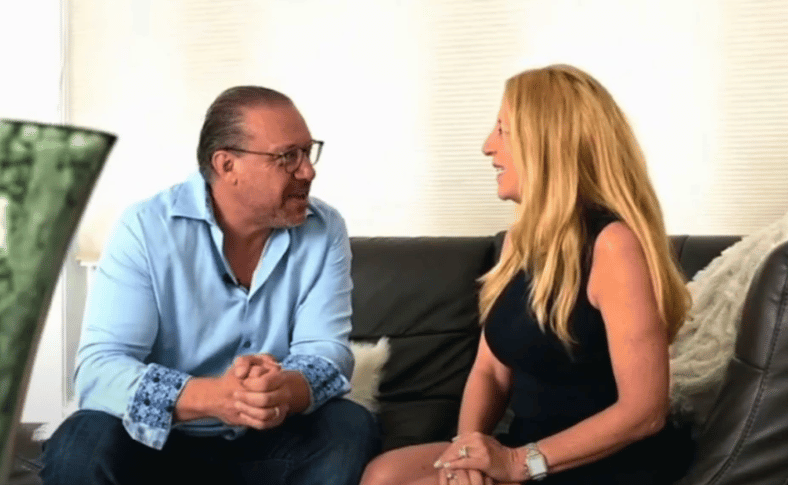
Ten Minutes Could Save You Months of Guessing
A short call with our intake specialist tells you exactly where you stand, and what to do next.
Right now, you're carrying this mostly alone. Trying to figure out what you're actually allowed to do for an adult child who can't always keep themselves safe. Wondering if guardianship is too far, or not enough. That's exhausting, and it doesn't have to stay that way. One call changes that.
Our intake specialist does one job, not five. While you're waiting somewhere else for an attorney to finish a hearing and clear their desk, ours is already telling you fast whether guardianship fits your situation, whether something less restrictive already covers it, or whether this is urgent enough to move on today.
You'll leave that call holding your Clarity Brief: where things stand right now, and the exact steps we'd walk you through from here. See what's in a Clarity Brief.
The call doesn't commit you to anything. If guardianship isn't the right fit, we'll tell you that too, and make a warm introduction to whoever actually can help. A treatment provider. A case manager. Whoever your family needs.
Two Things Have to Happen. Most Firms Only Handle One.
That's the difference between hiring an attorney and hiring a team. One files paperwork. The other stays with your family through however this actually unfolds.
Astor Simovitch Law was built from the ground up to close that gap. We handle Marchman Act and Baker Act cases every day.
So, guardianship for an adult child with a substance use disorder or mental illness isn't a side practice here, it's the same work, just a different legal tool. We know how to document a condition that improves, relapses, and improves again, in a way that still holds up in front of a judge.
We know which questions a court wants answered when the concern is ongoing capacity, not a single incident. And if your family ever needs an emergency legal response again after guardianship is in place, we're already the team that knows the whole history, not someone starting from a blank file.
So what exactly does Florida law let you do, and what does it actually mean for your family?
Guardianship in Florida, governed primarily by Chapter 744 of the Florida Statutes, is a legal process where a court determines that a person (called the "ward" once a guardian is appointed) can no longer make some or all decisions for themselves, and appoints someone to make those decisions instead.
It applies to adults of any age, not just the elderly. It's a civil proceeding, not a punishment and not an accusation of wrongdoing.
The court is answering one question: can this person safely make their own decisions right now, and if not, who should make them instead, and for how much of their life.
Three things that shape every guardianship case in Florida:
Before a guardian is appointed, the court must find the person incapacitated under §744.331 F.S., which requires an attorney be appointed for the alleged incapacitated person and a three-member examining committee, including a physician or psychiatrist, to evaluate them.
The court is legally required to consider less restrictive alternatives before appointing a guardian, and if guardianship is granted, the order must specify exactly which rights are removed rather than removing all of them by default.
If someone is in immediate danger right now, physically, medically, or through their own inability to keep themselves safe, a court can appoint an emergency temporary guardian under §744.3031 F.S. before the full incapacity process is complete.
Most families don't know this: an emergency temporary guardianship isn't a quick 30-day stopgap. Under current Florida law it lasts 90 days, and can be extended once for an additional 90 days if the emergency hasn't resolved. Several older sources online still list an outdated 60-day figure.
What Families Are Really Asking
Nobody calls us because things are going well.
They call because they've run out of ideas, afraid of things they don't usually say out loud.
Those fears are real. They're not catastrophizing, they're pattern recognition.
"I finally understood that losing his independence wasn't the same as losing my ability to protect him."
What you're watching is what incapacity does.
It doesn't ask permission before it takes away someone's ability to make safe decisions, and it doesn't wait until the family is ready. That's not something you caused. It's also why this law exists.
Fair question. Guardianship isn't all or nothing. Florida law requires the court to consider the least restrictive option, so the guardian only gets the authority the situation actually calls for. What that looks like in practice depends on two things:
That's the part most attorneys don't talk about.
Filing the petition is just the first step. What actually determines the outcome:
- Getting the scope of authority right the first time.
- Navigating the examining committee process.
- Knowing when limited guardianship is enough, and when it isn't.
Here's the thing most people don't realize:
An emergency temporary guardianship can be in place in days, but it only lasts 90 days unless the underlying case is ready to stand on its own. Waiting for the right time usually just means waiting for the hospital, the bank, or the court to force the timeline instead of you.
Get Your Clarity Brief:
Turning "What Am I Even Allowed to Do"
Into an Actual Answer
Most families walk into this not knowing what's actually true anymore. Whether they still have any say. Whether guardianship is more than the situation calls for, or exactly right. Whether the answer changes depending on which day you're asking.
On your first call with us, we build something we call the Clarity Brief. It's a real document: printed, bound, and yours to keep. Something you sit down with a spouse over, bring to a family meeting, or hand to your child's treatment provider or case manager.
It doesn't just explain what guardianship is in general. It answers four questions specific to your family:

We can only build your Clarity Brief once we know your family's specific situation. That's what the call is for.
How the Guardianship Process Works in Florida
Assessment call
Petition preparation and filing
Emergency temporary guardianship
Incapacity hearing
Order appointing a guardian
Ongoing oversight and compliance

Mark Astor and his team did a fantastic job helping a close family member of mine through a difficult phase of substance abuse.
Mark both educated me fully on options and served as a relentless advocate for my desired outcome.
My family member is now sober for over 5 years.

Our family will always be grateful for your assistance with the Marchman Act.
It has been a lifesaver! We are now celebrating 3 years sober!
We never could have done it without the assistance of the intervention expert you provided and your amazing legal guidance.

Mark Astor and his team are exceptional.
He provided outstanding legal support and guidance throughout my case, demonstrating both expertise and genuine care.
I highly recommend him for anyone in need of legal assistance.
That's what the call is for.
What Happens When You Wait
The family starts
to doubt itself.
The first conversation about guardianship is usually the hardest one. Once you reach that decision, it's fragile.
Time gives room for doubt, for one relative to push back, for your child to promise "I've got this" in a way that feels real in the moment, right up until it isn't.
The window for
fast action narrows.
An emergency temporary guardianship requires evidence of danger happening right now.
If the immediate crisis passes before you act, that faster path can close, and you're left with the standard incapacity timeline instead.
Evidence gets
harder to document.
The specific night you had to call for help starts to blur into "sometime last spring." Names, dates, and details fade.
Judges notice when evidence feels reconstructed after the fact instead of remembered as it happened.
Decisions pile up with
no one to make them.
Every day without legal authority in place is a day those decisions don't get made.
Or decisions get made by whoever happens to be in the room, not necessarily the person who should be.
"Your child gets a court-appointed attorney the moment a petition is filed. Make sure your family has one too."
Make sure you have an attorney on your side too.
GUARDIANSHIP · Florida
A REAL CASE STUDY
There was no prior legal history here, no Marchman Act, no Baker Act, nothing. His mother had always just handled things informally: driving him to appointments, managing his money, talking him through bad days.
The call that changed things came after he accused a neighbor of working with the people he believed were watching him, then went three days without answering her calls at all.
When he finally picked up, he told her flatly that he didn't need her help and didn't want her involved in his decisions anymore.
She realized she had no actual legal standing to do any of it if he refused to cooperate, and he was refusing more and more.
He had no other family nearby to step in and no one else legally positioned to act on his psychiatrist's warnings. Every week he went without treatment made the version of him who still trusted her a little harder to reach
His psychiatrist told her plainly that without someone able to make decisions on his behalf, his condition was likely to keep deteriorating until something forced a crisis: a hospitalization, an eviction, or worse.

Because there was no immediate danger requiring an emergency filing, we moved through the standard process: examining committee evaluation, incapacity hearing, and a limited guardianship order giving his mother authority over his medical and financial decisions while preserving his right to make decisions about his own social life and daily routine.
He still lives independently nearby. He wasn't thrilled about the process at first, but eighteen months later, he's stable enough that they're preparing to petition for a partial restoration of his rights, exactly the kind of outcome Florida's guardianship law is built to allow for.
Why Families Across Florida Call Us For Guardianships
Prosecutor, Then Defense
A Reason To Remember
Where Addiction and Mental Health Law Run Out
Both Sides Of The Courtroom
Most firms treat guardianship as elder law, an adult child helping an aging parent who can no longer decide for themselves.
Not here. We built our guardianship practice for families living with chronic substance use disorders and serious mental illness, no matter what legal step got them here first.

"Respond decisively during moments of crisis while remaining within the boundaries of the law" — by combining legal authority with case management.
"I don't measure success by whether we won the petition. I measure it by whether that family still has what they need a year later. The order is the beginning. Not the end."
Mark G. Astor, Esq. · Astor Simovitch Law
When you hire us, you get one team handling both halves of this at once: the legal strategy and the ongoing care coordination. Most firms think the finish line is a filed petition. But for Astor Simovitch Law filing the petition is step one, not the last one.
No family should have to coordinate this by themselves while they're barely holding the rest of their life together. That's what We Save Families actually means. It's also why that first call matters more than it might seem.
The sooner we're involved, the more of your options are still on the table.
The scope of authority, the evidence, the plan for what happens after the hearing.
A ten-minute call tells you exactly where you stand, and it won't cost you anything to find out.

They saved my life. This firm is filled with good people who genuinely care about YOU their client. Beyond that, they have the expertise to make sure that you are protected against the stupidity of the world around you.

I am grateful to this firm and Mr. Astor for their assistance in saving my son's life. I sincerely believe my son is alive today due to the Marchman Act.
What Life Could Be Like



The hospital calls, and you're actually allowed to say yes. You sign the paperwork for a treatment change without someone telling you it isn't your call to make. The psychiatrist's office stops asking your child to confirm you're allowed on the phone, because you already have the authority. You're not guessing anymore about whether you're overstepping. You know exactly what's yours to decide, and what isn't.
None of that fixes the disease. It doesn't erase the diagnosis or make the next hard day disappear. But it means the next crisis, if there is one, doesn't start with you finding out you have no legal standing to help. It starts with you already being able to act.
We Don't Take Every Case.
That's not a disclaimer. It's how we protect you.
Ask us anything. As many questions as you have. Nothing you're going to say is something we haven't heard before. Here's exactly what happens on that call:
Tell us what's been happening. We ask direct questions. Nothing you say is going to surprise us.
We tell you honestly what the law can accomplish in your specific situation. And what it can't. No runaround.
If we're the right fit, we move quickly. If we're not, we make a personal introduction to someone we know and trust.
Either way, you leave the call knowing exactly where you stand. That's the promise.
You've been carrying this long enough. Call us. We'll figure out the rest together.
24/7
FAQ'S For A Florida Mental Health Guardianship Attorney
Does my authority as a parent end when my child turns 18?
What's the difference between guardianship and the Marchman Act or Baker Act?
My child was Baker Acted. Doesn't that already give me authority to make decisions for them?
Can guardianship force my adult child into treatment?
My child refuses to admit there's a problem. Can I still pursue guardianship?
How fast can this happen if we're in a crisis right now?
Will guardianship take away all of my child's rights?
My child has already been through the Marchman Act or Baker Act. Does that help with a guardianship case?
Can guardianship be undone later if my child stabilizes?
Yes. If your adult child's condition improves, you can petition the court to restore some or all of their rights.
What can I actually do once I'm appointed guardian that I can't do now?
Three Terms Worth Understanding
The formal court finding that a person can no longer exercise some or all of their legal rights, made only after a hearing, an examining committee evaluation, and representation by a court-appointed attorney for the person being evaluated. The court is required to specify exactly which rights are removed, not assume all of them are, and to consider less restrictive alternatives first.