
Marchman Act Attorney in Miami
- The Marchman Act is Florida's law that lets a family ask a court to order assessment and treatment for a loved one whose substance use has made it impossible for them to choose help on their own.
- You don't need permission. Under Florida's Marchman Act, a relative can ask a Miami-Dade judge to order assessment and treatment for a loved one whose substance use has taken the wheel.
- This isn't a criminal charge. It's a civil, health-driven process. No arrest, and nothing that follows your loved one around like a record.
- It can stay private. Marchman Act involuntary case records are confidential under Florida law, which matters in a city where word travels fast inside your own circle.
- It's handled here, in Miami-Dade. The petition goes through the county court that serves Miami, and there is no filing fee to bring it.
This is Why a Marchman Act feels harder in Miami
Here's what that quiet actually costs: time.
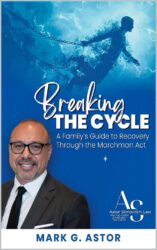
Mark literally wrote the book on Florida's Marchman Act.
Mark Astor wrote Breaking the Cycle for families trying to help a loved one who won't accept it yet, a plain-English guide to the Marchman Act built from hundreds of real Florida cases. Call our office and we'll mail you a physical copy and send the digital version to your inbox right away. Free, and yours to keep.
What you're really trying to protect.

Mark Astor and his team did a fantastic job helping a close family member of mine. My family member is now sober for over 5 years.
Our family will always be grateful for your assistance with the Marchman Act. It has been a lifesaver! We are now celebrating 3 years sober!
What happens when you file a
Marchman Act petition in Miami.
Marchman Act petitions for someone in Miami go through the Eleventh Judicial Circuit, the court that serves Miami-Dade County. Same court whether your family is in Doral, out in Kendall, or down in Pinecrest.
Here's the reassuring part. Most families resolve this without a public fight. But getting it right the first time, with the clinical picture lined up correctly, is what makes the difference between a piece of paper and a result.
Here's the shape of it.
Who can file, and what you're asking for
Florida law is broad about this. Any relative can file, and there's no filing fee (Fla. Stat. § 397.68112). In plain terms, you're asking a judge to order an assessment, and if the criteria are met, court-ordered treatment for a loved one who can't say yes to it himself right now.
What the court looks at
The Miami-Dade judge isn't looking at whether he refused help. Refusal alone isn't enough. The standard (Fla. Stat. § 397.675) asks, in plain English, whether the substance use has taken away his ability to make safe decisions for himself, and whether that puts him at risk of harm.
What comes next
If the criteria are met, the path moves toward assessment and then court-ordered treatment, with room to keep him there long enough for it to matter. It's built around care, not punishment. No one can promise an outcome, but the law gives your family a pathway that didn't exist before.
Keeping it private
This is where a careful, low-conflict approach earns its keep. Marchman Act involuntary records are confidential and exempt from Florida's public records law (Fla. Stat. § 397.6760). In a Miami circle where everyone knows everyone, that protection is not a small thing.
Where you file A Marchman Act in Miami-Dade, and what to bring
In Miami-Dade, a Marchman Act petition is part of the Probate Division of the Eleventh Judicial Circuit, and it's heard by a general magistrate. That matters, because it means this is quieter and more contained than the public courtroom most families are dreading.
For an adult, you file in person at the Clerk's Probate and Mental Health office, 20 NW 1st Avenue, Miami, FL 33128. If the person is a minor, it's filed through the Clerk's Juvenile Court instead.
You file the court's Petition for Involuntary Services, along with a Notice of Related Cases. The forms are in English and Spanish, and there is no filing fee. The clerk's office asks you to arrive before 3:30 p.m. so your petition can be processed that same day, so bring a valid photo ID and the person's basic details.
Questions before you go?
The Clerk's mental health office is 305-275-1155, the circuit's Marchman Act line is 305-349-7475, or you can email Marchmaninfo@jud11.flcourts.org.
Here's why families call us for this part. The petition is where these cases are won or lost. The magistrate weighs the clinical picture, and a petition that's thin or filled out wrong can cost you the hearing, and the window.
That's the part Mark handles every week. You can file it yourself. Most families just would rather not do it alone the first time, when it matters most.
You don't have to have it figured out before you call.
That's what the call is for.
Why Miami families call Mark Astor
for a Marchman Act case.
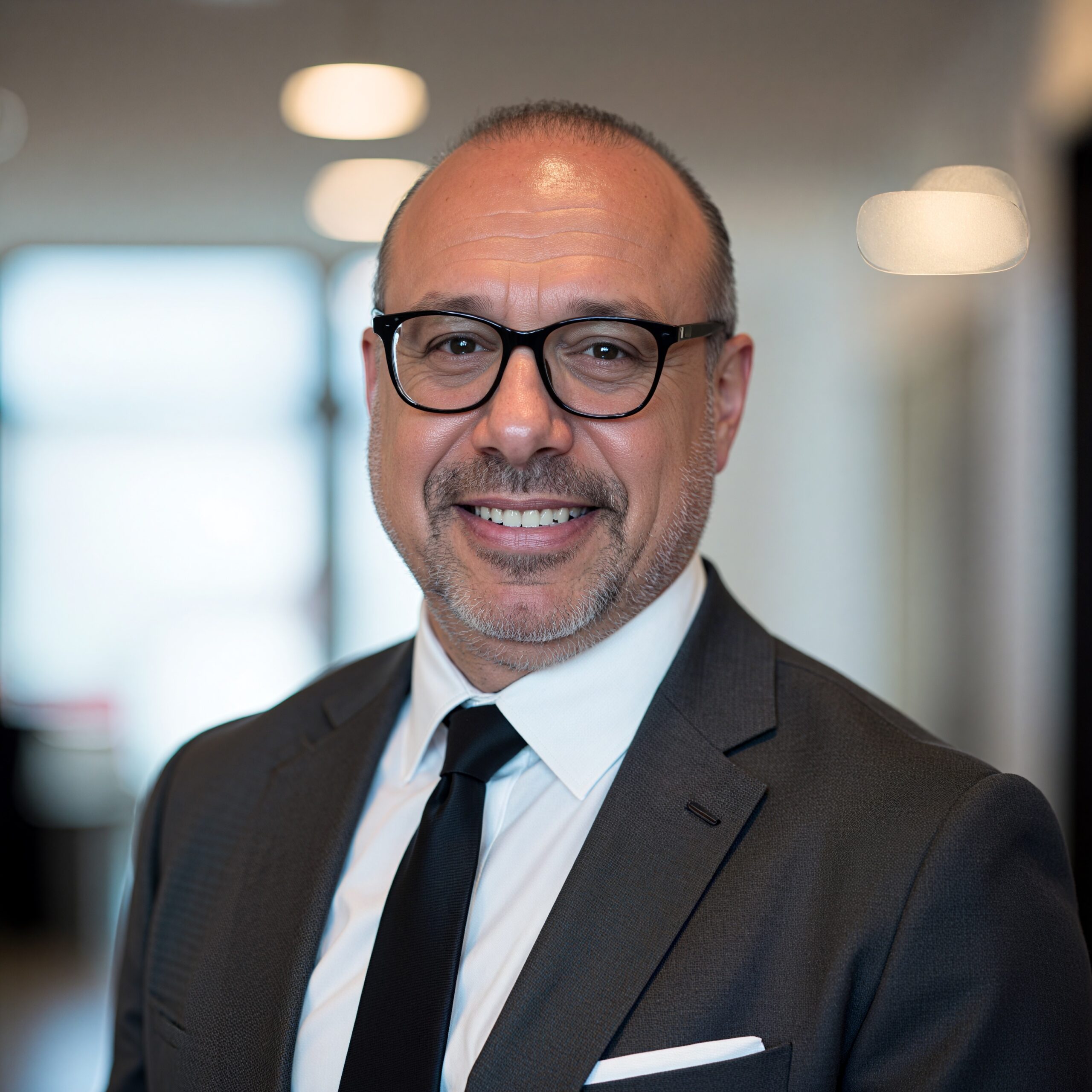
Mark Astor is a dedicated Miami Marchman Act attorney. In fact, he built the first law firm in the country devoted only to this work, and he has filed hundreds of these petitions for Florida families.
He was a prosecutor first, then a defense attorney, so he understands how the criminal system and behavioral health collide, and how these Chapter 397 cases actually move through a Miami-Dade courtroom.
What shaped his approach isn't sentiment. It's a hard-won belief that these are personal problems with a legal solution, not the other way around.
He'll tell you honestly where you stand, including when the news isn't what you hoped, because you deserve a straight conversation and not a sales pitch.
He keeps his caseload small on purpose. Whether your hearing runs through the Eleventh Judicial Circuit downtown or you're calling from Caracas at 2 a.m., when you call Mark, you get Mark.
in the courtroom
Attorney, Palm Beach County
FL, MA & D.C.
Marchman Act cases filed

I cannot recommend Astor Simovitch Law enough. I felt so seen and heard from the very beginning of our interaction. The compassion they showed me was unmatched. I felt completely protected by the entire team.
If we could give them 10 stars, we would. They jumped on an emergency situation and were ready to file with a court within five hours. We even got a call from Mark Astor at 11pm, providing us detailed info.
Him and his team handled my situation impeccably and immediately without any delay and communicated with me throughout the process. Mark Astor is a true embodiment of a man of integrity and is the best of the best!
Marchman Act questions Miami families ask most.
In person at the Clerk's Probate and Mental Health office, 20 NW 1st Avenue, Miami, FL 33128. There's no filing fee.
You file a petition with the court serving Miami-Dade, the Eleventh Judicial Circuit, and there's no filing fee. Any relative can file, so it doesn't have to be a parent. Because the clinical picture is what the judge weighs, how the petition is prepared matters more than most families expect. The full county walkthrough lives on our Miami-Dade filing page.
Yes, a relative can petition a Miami-Dade judge to order it, if the legal standard is met. "They're an adult" is not the wall it feels like. Florida's Marchman Act lets you ask the court to step in when substance use has taken away their ability to make safe decisions. A Miami-Dade judge, not you, makes that call.
Yes, Florida law lets any relative file, even one who lives out of state or abroad. This one matters a lot in Miami. So many families here are split between Florida and the Northeast, or Florida and Latin America, with a loved one living in Miami on their own. You don't have to be a Florida resident to act, and much of the work can be handled by phone, so distance doesn't cost you the window.
No, Marchman Act involuntary records are confidential and exempt from Florida's public records law. That protection comes straight from the statute (Fla. Stat. § 397.6760). In a Miami community where you're afraid of it reaching the parish or the family group chat, a careful, low-conflict approach is built to keep this where it belongs, inside your family.
Get them medically safe first, then a Marchman Act petition can open the door to court-ordered treatment. In an emergency, an ER like Jackson Memorial or Baptist Hospital of Miami handles the immediate danger. The Marchman Act is the next step, the one that addresses why last night happened and works to keep them in treatment long enough for it to hold.
The Baker Act is for a psychiatric crisis; the Marchman Act is for substance use. Many Miami families need to understand both. If your loved one is dealing with both at once, the right tool isn't always obvious. We break the difference down in full on our Marchman Act guide.
Other professionals who help Miami families through the Marchman Act
We are not the only piece of this. A lot of families need an interventionist, a therapist, or a treatment bed, sometimes before a petition, sometimes alongside one.
Here are Miami-area places families ask us about.
They are independent, not part of our firm, so do your own diligence. If you want, we can help you think through which kind of help fits where you are.
Therapists
Dr. Marino E. Carbonell
marinocarbonell.com
305-447-2882
Jessica B. Dieppa
guidedpathstherapy.com
786-410-4485
Julio Perez-Delgado
emphourinc.com
786-592-2323
Facilities
South Miami Recovery
southmiamirecovery.com
305-661-00556
Summer House Detox Center
summerhousedetoxcenter.com
305-203-0969
Transitions Recovery Program
transitionsrecovery.com
786-492-1158
Interventionists
Axiom Intervention
axiomhealthservices.com
561-698-1177
R&A Therapeutic Partners
therapeutic-partners.com
786-452-7352
South Florida Intervention
southfloridaintervention.com
202-390-2273
A Miami Marchman Act attorney like Mark Astor ensures you don't have to carry this alone anymore.
Serving Miami, Coral Gables, Kendall, and the surrounding Miami-Dade area.